Registration is open for hands-on program designed to train participants in Research Paper Writing
Five Day Online Training Program
From Research Idea to Journal Submission:
A Practical Guide to Research Paper Writing
Fee INR 1999/- (inclusive of taxes)
Early Bird Fee INR 1299/- (till 15th Oct 2026)
Disciplines & Prerequisites:
Multidisciplinary Scope: Suitable for participants across Sciences, Commerce, Management, Humanities, and Social Sciences.
No Prior Experience Needed: Prior publication experience is not required. The course guides you from absolute foundational concepts to final submission planning.
Day: Monday, 26th Oct 2026
Time: 07:00 PM
Program format :
Five days online training, with 90 minutes per day:
60 minutes of instruction and demonstrations followed by 30 minutes of guided activities and Q&A.
Course Curriculum

Session 1: From Research Idea to a Publishable Paper
Topics: Understanding research problems; narrowing a broad topic; developing research questions and objectives; identifying the intended contribution; distinguishing different research-paper types; and assessing feasibility.
Activity: Develop a one-page Research Paper Concept Canvas.
Take-home output: A focused paper concept with a working title, problem, questions, objectives and intended contribution.

Session 2: Literature Review, Research Gaps and Responsible Use of AI
Topics: Sources of scholarly literature; databases, journals and theses; types of literature reviews; keywords and Boolean searching; screening and critical appraisal; organising and synthesising evidence; research-gap types; and responsible use of AI-assisted discovery and review tools.
Activity: Develop a search strategy and begin a Literature Review Matrix linked to the Day 1 concept.
Take-home output: A search strategy, literature matrix and preliminary research-gap statement for further verification.

Session 3: Writing the Research Paper: Title to Conclusion
Topics: IMRaD and discipline-specific structures; preparing the title, abstract, introduction, methods, results, discussion and conclusion; paragraph organisation; appropriate verb tenses; tables and figures; citations and references; and reference-management tools.
Activity: Analyze sample sections and prepare an outline for participants’ own papers.
Take-home output: A manuscript outline, section-wise writing guidance and revision checklist.

Session 4: Journal Selection, Publication Ethics and Manuscript Preparation
Topics: Matching a manuscript to journal scope and readership; journal-finder tools; verifying indexing; understanding journal metrics; recognising questionable publishing practices; open-access models, APCs and affordable publishing routes; publication ethics; and journal-specific formatting and reference styles.
Activity: Compare potential journals using a Journal Selection Scorecard.
Take-home output: A justified journal shortlist and manuscript-compliance checklist.

Session 5: Submission, Peer Review and the Publication Action Plan
Topics: Preparing submission files; writing a cover letter; navigating submission systems; understanding editorial decisions; responding to reviewers; respectful disagreement; handling rejection and resubmission; and checking publication proofs.
Activity: Prepare a point-by-point response to illustrative reviewer comments and develop an individual action plan.
Take-home output: Cover-letter and reviewer-response templates, a submission checklist and a realistic 30-day action plan.
Who is this course for?

Researchers who want to enhance their academic writing skills with the application of state of art tools and techniques

Researchers aspiring to contribute to high-impact journals with their research findings

Postgraduate Students preparing to write their first academic paper, thesis chapter, or research article.

Ph.D. / Doctoral Scholars seeking a structured, step-by-step roadmap to navigate literature gaps, manuscript structuring, and peer review.

Early-Career Faculty & Independent Researchers aiming to build or enhance their publication record in indexed, high-impact journals.
2,000+ students have already transformed their Research Journey with AIGR
Know your Mentor
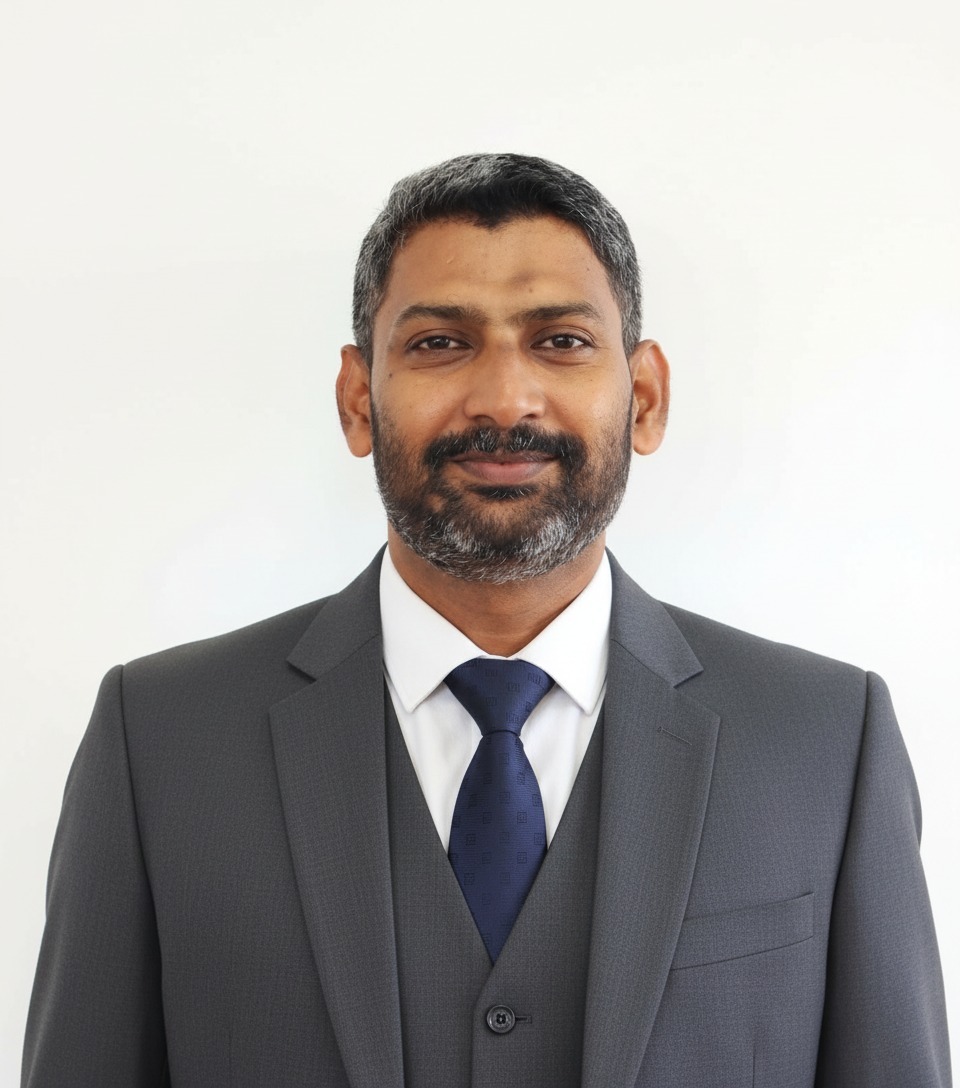
Dr. Ibrahim Bathis K. is a geospatial and environmental scientist with a PhD in Remote Sensing Applications and more than eight years of professional experience in ecology, environmental assessment, natural-resource management, and community-centered research. His expertise includes GIS, remote sensing, watershed and hydrological studies, climate and ecosystem analysis, biodiversity mapping, and sustainable development. He has led multidisciplinary projects, field surveys, capacity-building programs, and stakeholder collaborations involving government agencies, academic institutions, and local communities. His combination of scientific knowledge and project-management experience enables him to provide valuable strategic and technical guidance to initiatives related to ecology, biosciences, conservation, and environmental sustainability.
How The Course Benefits You?
Flexibility & convenience of time and space
A gold-standard certification signifies of excellence and reliability in a particular field
Access to expertise & world-class curriculum
Enjoyment and confidence in publication research paper
Instructor's continuous support, holding your hand step-by-step to develop high-quality analysis using real data
1:1 Sessions with experts
Frequently Asked Questions
1. What are the prerequisites for attending this program?
Prior publication experience is not required. The course guides you from absolute foundational concepts to final submission planning.
2. Will the recordings be available?
We understand that everyone has a different schedule, which is why our program is designed to be flexible. Participants can access the recorded sessions and learning materials according to their schedule
3. Will I receive a certificate upon completion of the program?
Yes, upon successful completion of the program, participants will receive a certificate of completion. This certificate validates the skills and knowledge acquired during the program and can be a valuable addition to your professional credentials